Showing posts with label Marie Teemant. Show all posts

Sunday, April 14, 2013

BONUS Episode: Ancient Pueblo Culture

The Ancient Pueblo Culture existed between AD 100 and 1600 in the area of the United States known as The Four Corners (New Mexico, Utah, Arizona and Colorado)


They were also known as the Anasazi, a Navajo word meaning 'Ancient Enemy'. Today the word is more commonly interpreted to mean 'Ancient Ones' or 'Ancient People'. The modern Pueblo tribes include the Zuni, Hopi, Laguna and Acoma.

Pueblo Bonito

Pueblo Bonito

Mesa Verde
Digital Painting of a portion of Mesa Verde, by Julia Allen


Don't forget to tune in on Wednesday to learn more about Zombie Art! And come and hang out with us on Facebook! https://www.facebook.com/ArtsandFacts

Here are some of the links we used when researching this topic:


All of our previous episodes can be found at iTunes U.

Wednesday, January 9, 2013

Episode 49: Favorite Photographers- Marie's Farewell Episode


This week on Arts and Facts:

Marie Teemant had an idea to start an art history podcast at Utah Valley University. She gathered a team of fellow students who loved art history as much as she did and worked really hard to make her vision a reality. 

This is Marie's final episode with Arts and Facts, and as is tradition here at the podcast, she got to pick the topic for her farewell episode. Of course it was photography!

BRETT WESTON- Jo's favorite photographer


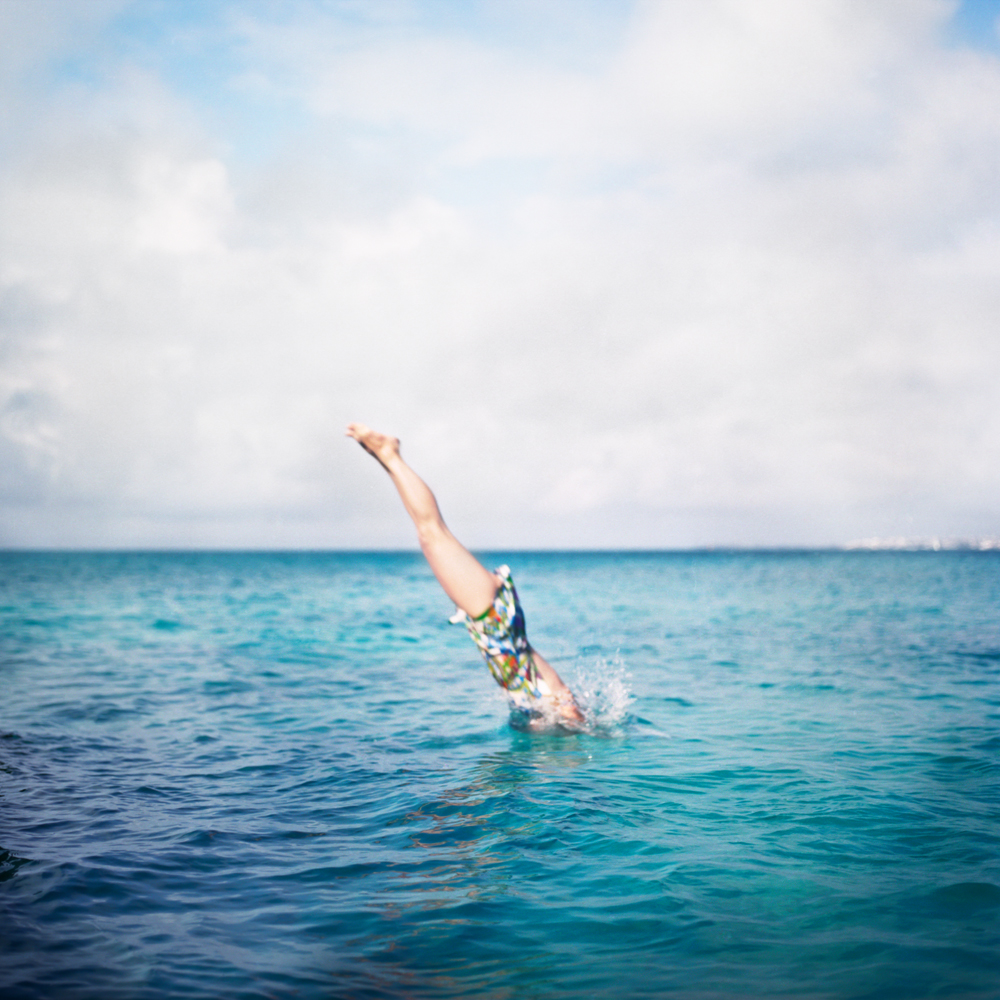
CIG HARVEY- Chloe's favorite photographer


View Cig Harvey's portfolio here. 


YOUSUF KARSH- Julia's favorite photographer


See Yousuf Karsh's portfolio on his website, here. 

JOYCE TENNESON- Marie's favorite photographer


See Joyce Tenneson's portfolio on her website, here. 


We'll all miss Marie here at Arts and Facts, but we know she has great things in store for her! If you'd like to see Marie's work you can view her portfolio at marieteemant.com 

Tune in next week to learn more about the fascinating world of Cereal Box art. Who knew?

You can access all of our episodes at iTunes U.
If you have topics in art history you're just itching to hear more about, leave us a comment or email us at: uvu.artsandfacts@gmail.com.


Wednesday, January 2, 2013

Episode 48: Folk Art


In this weeks episode of Arts and Facts:

Defining 'Folk Art' is pretty difficult, as Marie and Julia came to find out.  In this episode they have a minor smack down over what can be defined as 'Folk Art', but it's all in good fun.

One interesting aspect of Folk Art is that it is not influenced by academic circles or movements, which both Julia and Marie agree, is an interesting and meaningful benefit to the art form.

The following artists are from the Harlem Renaissance of the 1920's and 30's:


Romare Beardon, 
Romare Beardon

Sargent Johnson
Lois Mailou Jones

Grant Wood was a Midwestern artist who came to be classified as a regional artist.


Grant Wood, Young Corn
Grant Wood, American Gothic

Grant Wood, Stained Glass


Examples of Antique Folk Art:


Examples of folk art from non-western cultures:


Next week will be Marie's farewell episode, so of course we have to talk photography! Tune in to listen to the podcast teams favorite photographers and some of their most loved work.

If you have topics in art history you're just itching to hear more about, leave us a comment or email us at: uvu.artsandfacts@gmail.com.


Wednesday, December 19, 2012

Episode 46: Dada is Da-Dumb

While there are many movements based in deep thought and consideration for each piece, Dada... well it just isn't one of them.

As a reactionary movement after WWI devastated Europe, the Dada artists questioned the very nature of art in their almost nonsensical work. Sometimes, even, it seemed that they put more work into their titles than the work (especially in pieces known as "readymades").

The Fountain by Duchamp
Another Duchamp Readymade

Cut with a Kitchen Knife by Hannah Höch
Hans Arp collage of blue squares


(Ready for a long title???) The Bride Stripped Bare by her Bachelors Even (the large glass) by Duchamp

There are many movements that come after Dada which follow the same line of thought... what is art? Take it or leave it, it's a part of our  art history. What do you think of dada?

Wednesday, December 12, 2012

Episode 45: Angels Among Us


Rembrandt, The Sacrifice of Abraham, 1635


Waterhouse, The Annunciation, 1914 


Rossetti, Annunciation, 1865
Campin, The Merode Altarpiece, 1425-1428

Cimabue, Madonna and Child, 1280-1285

Raphael, Sistine Madonna, 1513-1514


Lippi, Madonna and Child with Angels, c. 1467


Wednesday, November 21, 2012

Episode 42: Photography's Struggle to become Art


Since its birth in 1839, photography has gone through some ups and downs within the realm of the arts. There are some great photographers who made it their goal to help this cause.

This cartoon shows that Nadar was one of the most respected photographers in Paris
during his time. He was also a respected art critic, which probably helped


 Julia Margaret Cameron's work in pictorialism is beautiful and feminine. While her portraits were the more respected body of her work until more recently, she did show how photographs could mimic painting and bring an other worldly quality to them.

Oscar Gustave Rejlander


Oscar Gustave Rejlander was a painter first, and pulls his sense of painting right into his photographs.

Edward Steichen

Edward Steichen arguably did the most for photography during this early period, having a hand in gallery work, magazine production, and producing beautiful imagery as well. He also worked for the MoMA, which gave him the perfect opportunity to spread his thoughts about photography and its beauty into the art world more than it already had been.

Ansel Adams
Edward Weston
Edward Weston


Edward Weston and Ansel Adams are two of the best examples of Modern photographers. They wanted their images to be sharply in focus, and look to shape and form to make interesting compositions.

William Eggleston
Even when black and white photography were grudgingly accepted as art, color photography still had to push its way into recognition. William Eggleston had the first all color photography show at the MoMA thanks to John Szarkowski, who was not only a curator determined to help photography, but also a prolific writer for art theory regarding the camera.